Is It Worth Putting Film on Windows in Katy?
A straight look at what window film does well, where it falls short and how to tell which windows in your house deserve it.
Is it worth putting film on windows?
Yes, for most homes it is worth it on the windows that take direct sun or face the street. Good film cuts heat and glare, blocks most UV that fades floors and furniture, and security film holds broken glass together. It is less useful on shaded glass or windows with failing seals. A free consultation: (281) 612-5386.
What does window film actually do for a home?
Window film is a thin polyester layer applied to the inside of the glass. Depending on the type, it changes how much heat, light and UV passes through, and how the glass behaves when something hits it. The value comes from matching the film to the problem each window has.
In a Katy summer, a west-facing living room window can turn the afternoon into the warmest part of the day indoors. A heat-rejecting film, especially ceramic film, takes a real share of that solar heat out before it reaches the room, so the air conditioning has less to fight and the sofa by the window becomes usable again.
- Heat rejection that keeps sun-facing rooms closer to the temperature of the rest of the house
- Glare reduction on TVs, monitors and kitchen counters
- UV protection that slows fading of wood floors, rugs, artwork and upholstery
- Daytime privacy from the street or a close neighbor
- Security film that keeps shattered glass in the frame and slows forced entry
Is security window film worth it, or just a deterrent?
Security film is thicker than standard tint and uses a stronger adhesive. When the glass breaks, the pieces stay stuck to the film instead of falling into the room. Someone trying to get in has to keep striking and pulling at a sheet that bends rather than gives way, which takes time and makes noise.
It does not make glass unbreakable, and we will not tell you it does. What it does well is buy time and keep sharp shards off the floor, which matters on a back door sidelight, a ground-floor bedroom window or glass near where children play. For more holding strength, the film can be anchored to the window frame so the whole pane resists being pushed in.
It also helps during Gulf Coast storms by keeping glass from spraying inward if a branch or flying debris cracks a pane. Treat that as a safety layer for the room, not a replacement for shutters or rated storm protection.
When is window film not worth it?
Film earns its keep on glass that has a problem to solve. A north-facing window under a deep covered patio rarely takes enough direct sun to justify heat-rejecting film, and we would rather tell you that than add it to the quote.
Some windows need attention before film. If you see fog or moisture trapped between the panes of a double-pane unit, the seal has failed, and film will not fix it. The same goes for cracked glass or frames that are rotting or pulling away. In those cases the honest order is repair or replace first, then film if it still makes sense.
It also helps to be realistic about energy savings. Film reduces the heat that comes in through the glass, which is often the biggest gain in a sunny room. It cannot make up for a thin attic or leaky ductwork, so a house with those issues will feel the difference most in the filmed rooms rather than everywhere.
- Windows in full shade most of the day
- Double-pane units with fogged or failed seals
- Glass you plan to replace within a year or two
- Street-facing windows where your HOA limits mirrored finishes
What does an installation day look like inside your home?
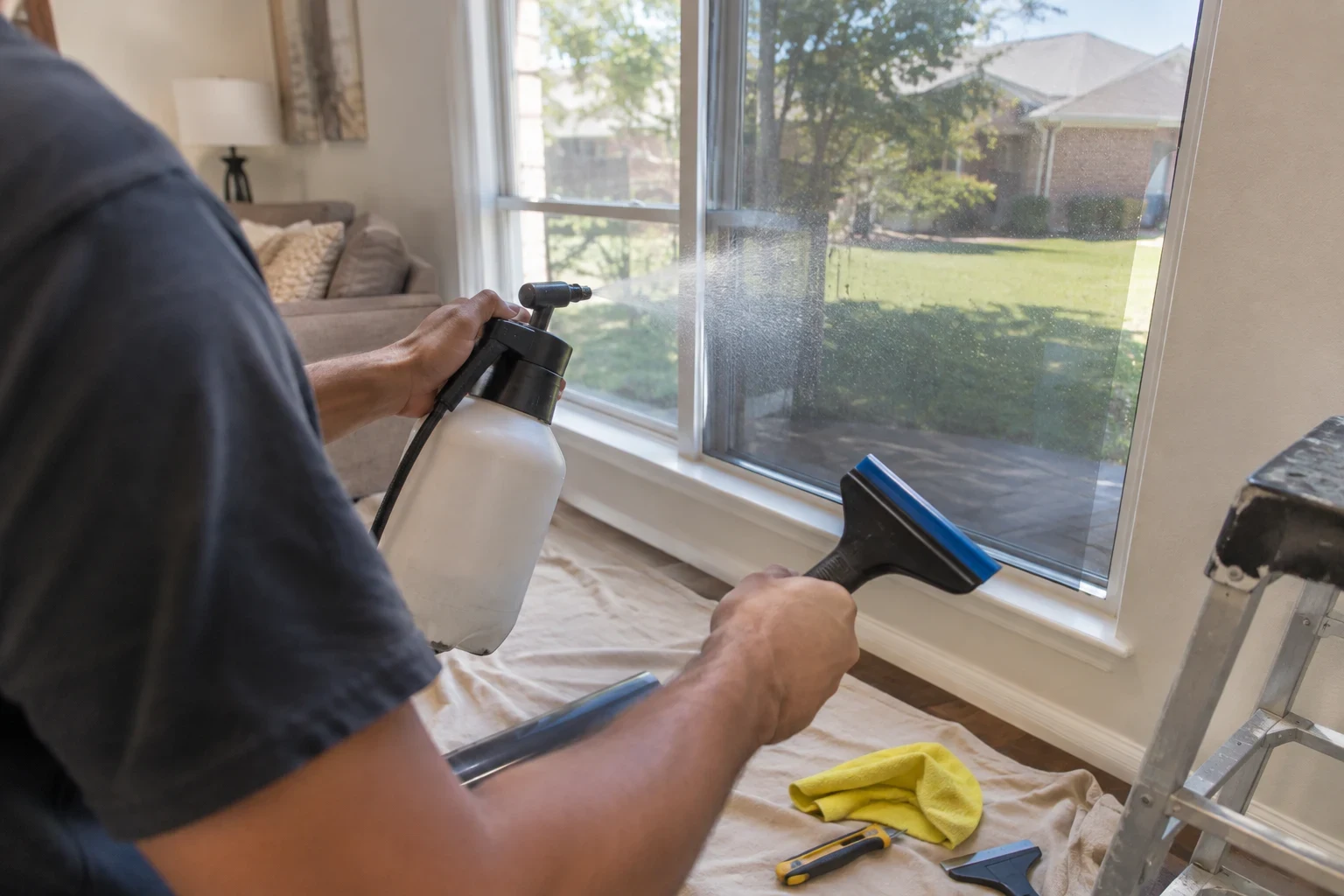
Because the work happens inside, we treat the house the way you would want a guest to. We move furniture back from the windows with your say on where it goes, lay drop cloths on floors and towels along the sills, and keep tools on a mat rather than on your counters.
Each pane is cleaned and the edges scraped before the film goes on, since a speck of dust left under the film shows for good. The film is cut to fit, set with a water solution and squeegeed flat. Trimmings and backing liners go straight into a bag as we work, not onto the carpet.
Before we leave, we wipe down the sills and window tracks, pick up the drop cloths, put furniture back where it was and walk the rooms with you. You may see a light haze or small water pockets for a few weeks while the film cures. That is normal and clears on its own as the moisture dries out.
Quick questions about window film
Something not covered here? (281) 612-5386
Will film make my rooms dark?
Not unless you choose a deep tint. Many ceramic films look almost clear from inside and still reject a good share of heat, so you keep the view and the daylight.
Can film go on double-pane or low-e windows?
Usually yes, but not every film suits every glass. We check the glass type first and recommend a film that is compatible with it, which avoids heat stress on the pane.
Do I need a permit or HOA approval?
Interior window film does not normally need a building permit. Some HOAs have rules about how glass looks from the street, so if you are considering a mirrored reflective film, check with yours first.
How do I clean film once it is installed?
Wait a few weeks while it cures, then use a soft cloth and a mild, ammonia-free cleaner. Skip razor blades and scrubbing pads on the film side.
Find out which windows are worth filming
Call and we will set up a free consultation at your home. We look at each window, the sun it gets and the glass it is made of, show you film samples against your own light and give you a clear written quote. If a window will not benefit, we will say so.