ServicesNon-Reflective Window Film
Non-Reflective Window Film in Katy
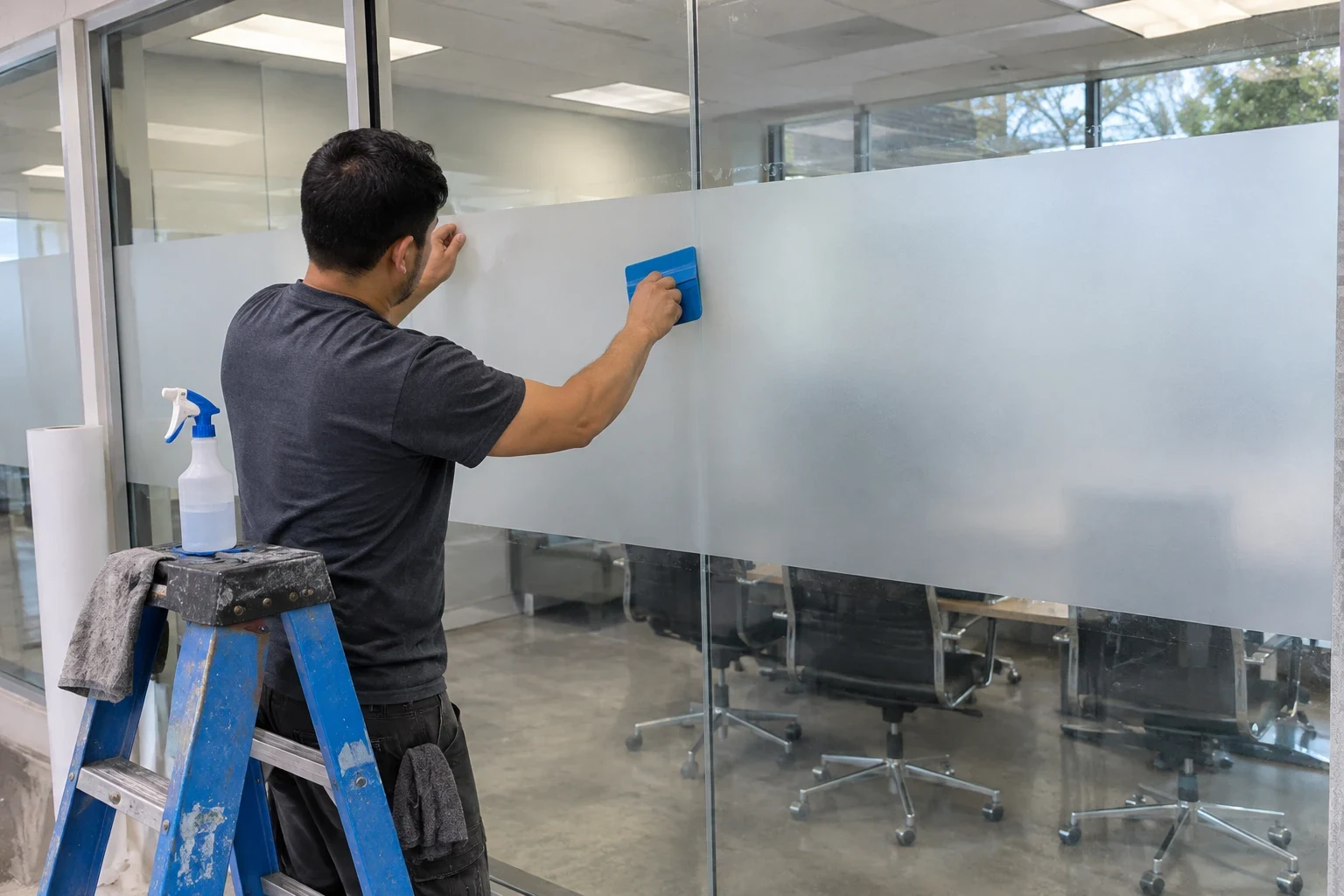
Non-reflective window film cuts heat, glare and UV without turning your windows into mirrors. From the street the glass looks close to untouched, and at night you see the room, not your own reflection. We protect your floors and furniture while we work and leave each room clean.
Heat and glare control that stays out of sight
Most people who ask for non-reflective film have the same complaint about older tint: it looked like a mirror. These films are built differently. Ceramic and other low-reflectance films absorb and block solar energy in the film layers instead of bouncing visible light back, so interior and exterior reflectance stay close to plain glass.
That matters in a few practical ways. Many homeowners associations limit mirrored finishes, and a low-reflectance film usually keeps the front of the house looking the way it did. Inside, you avoid the evening effect where dark windows turn into a wall of reflections. And because you can choose how much visible light the film lets through, a living room can stay bright while a west-facing bedroom gets a deeper shade.
It suits homes and offices alike. If you want maximum heat rejection and a reflective look does not bother you, our reflective window film page explains that option, and ceramic window film covers the highest-clarity films in more depth.
What the work includes
- 01
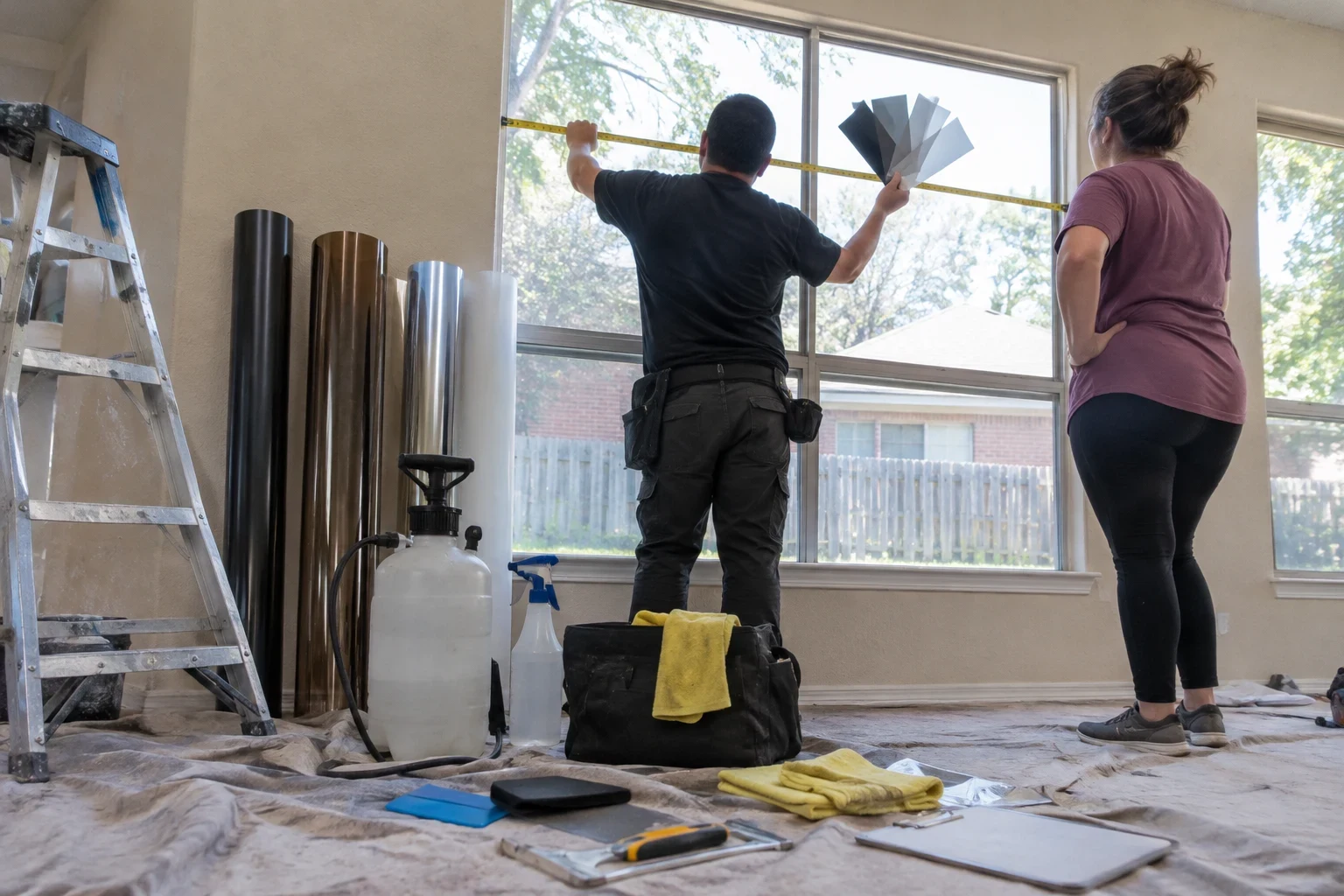
Film samples on your own glass
We hold sample pieces against your actual windows so you can judge tint level and clarity in your own light. A sample in a showroom tells you very little about a north-facing kitchen.
- 02
A glass compatibility check
Dual-pane and low-e glass can build heat stress if the wrong film goes on. We check the glass type and pane size before recommending a film, and we will tell you plainly if a window is not a good candidate.
- 03
Room protection before we start
Drop cloths go down under every window, and towels line the sills and frames. We move small items ourselves and ask before touching anything fragile or valuable.
- 04
Careful prep and installation
Each pane is scraped and washed, then the film is laid on a slip solution and squeegeed flat. Edges are trimmed with a small, even gap from the frame so the film sits neatly and does not lift.
- 05
Cleanup before we leave
Trimmings, backing liners and used towels go out with us. Sills, frames and floors are wiped down, and we walk the room with you so you can see the finished glass.
Questions about Non-Reflective Window Film?
Call(281) 612-5386Signs non-reflective film is the right fit
Your HOA rules out mirrored tint
Deed restrictions often mention reflectivity by name. A low-reflectance film gives you heat control while keeping the exterior within the rules.
Glare washes out screens
If you close the blinds every afternoon to see the TV or a monitor, film can cut that glare and let you keep the view.
Rooms bake in late afternoon
West and south windows take the hardest sun of a long Katy summer. A hot room you avoid until evening is the classic case.
Floors and fabrics are fading
Quality films block nearly all UV, which slows the sun damage you see on hardwood, rugs and upholstery near the glass.
Old film is bubbling or purple
Aging dyed film breaks down and discolors. We remove it, strip the leftover adhesive and install a clear, stable replacement.
How the day runs
- 1
Consultation and samples
We look at each window, test samples on the glass and talk through tint levels room by room. You get a written quote that lists every window and the film for it.
- 2
Setting up the rooms
On install day we lay drop cloths, cover sills and clear a working space at each window. Furniture we move goes back where it was.
- 3
Prepping glass and applying the film
Glass is scraped and washed down to bare, the film goes on wet and is squeegeed out, then the edges are trimmed and sealed down. Most homes are finished in a single visit.
- 4
Tidy-up and walkthrough
We clear every scrap and wipe each work area, then walk the house with you. We explain curing and how to care for the film from here.
What moves the price
Every quote is built from your windows, so we price after we have seen them. The quote is itemized by window, and it does not change unless you add or remove glass.
- Window count and size
- Total square footage of glass is the biggest driver. Many small divided panes take longer than one large pane of the same area.
- The film line you choose
- Ceramic films with high clarity and strong heat rejection cost more than basic low-reflectance films. We show both on your glass so the difference is visible.
- Reach and access
- Two-story foyers, transoms and windows above stairs need ladders or scaffolding and more setup time.
- Removing old film
- Stripping failed tint and its adhesive is slow, careful work and is priced separately on the quote.
Non-reflective film questions
Will non-reflective film make my rooms dark?
Only if you want it to. These films come in a range of visible light levels, from nearly clear to fairly deep. Many people choose a lighter film for living spaces and a darker one for bedrooms or media rooms.
Does it reject as much heat as reflective film?
Good ceramic non-reflective films come close, though the most reflective films still lead on raw heat rejection. For most homes the difference is small compared with how much better the glass looks. We will show you the specs side by side during the consultation.
Can it go on dual-pane windows?
Usually, yes, as long as the film is matched to the glass. We check pane size, glass type and sun exposure first, because the wrong film on insulated glass can add heat stress.
Why does the glass look hazy after install?
A little haze or small water pockets are normal while the slip solution dries out. That usually clears on its own over a few days to a few weeks, depending on the film and the weather. Avoid pressing on the film or wiping it during that time.
How messy is the install?
Not very, because we plan for the water and trimmings. Floors and sills are covered before any glass is touched, and we wipe down and clear out each room before we leave it.
How do I clean the film later?
After the curing period, use a soft cloth and a mild, ammonia-free glass spray. Skip abrasive pads and blades on the film side of the glass.
See the film on your own windows
We bring samples, check your glass and give you a written quote by window. The consultation is free.