ServicesHome Window Tinting
Home Window Tinting in Katy
We fit window film that takes the heat and glare out of the rooms you actually use, without darkening the house or changing how it looks from the street. We protect your floors and sills while we work and leave each room as we found it.
What home window film does for a room
Residential window film is a thin, optically clear layer applied to the inside of your glass. A good film turns away a large share of the sun's heat and nearly all of its UV, so the couch by the back windows stops fading and the upstairs bedroom stops holding heat into the evening.
It is the right call when one or two rooms never feel comfortable, when glare washes out a TV or a screen, or when you want some daytime privacy without curtains. In Katy, where west-facing glass takes the full afternoon sun for much of the year, those rooms are usually easy to spot.
Film is not the answer for everything. If a seal has failed and a pane is fogging between the layers, we will tell you that the window needs attention first, because film will not fix it.
What the work includes
- A look at your glass first
- We check whether each window is single-pane, dual-pane or Low-E, and how old it is. Some films put extra thermal stress on certain dual-pane units, so we match the film to the glass rather than the other way around.
- Film samples on your windows
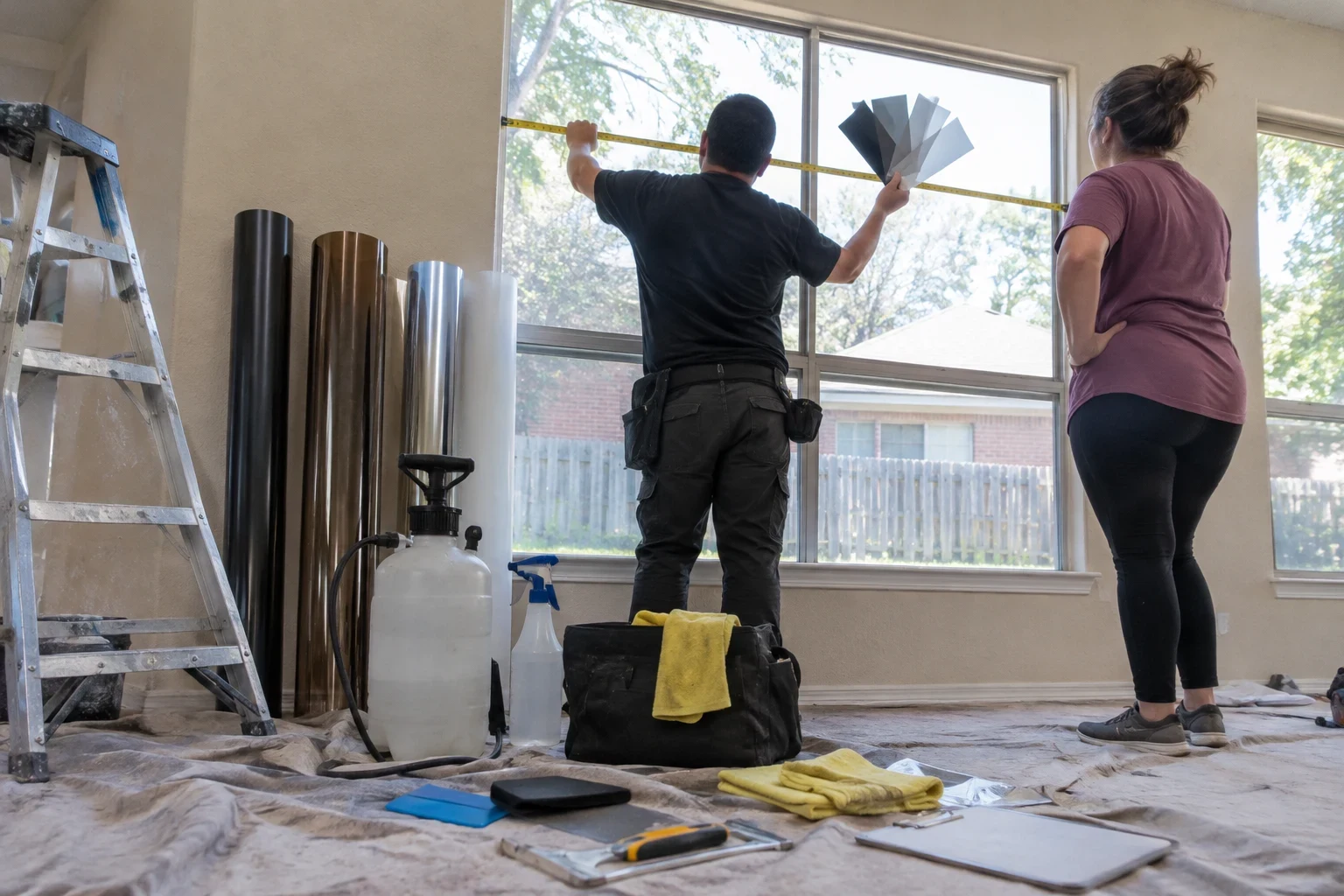
- We hold samples up to your actual glass so you can see the shade and clarity in your own light. A film that looks neutral in a showroom can read darker or bluer at home.
- Room protection
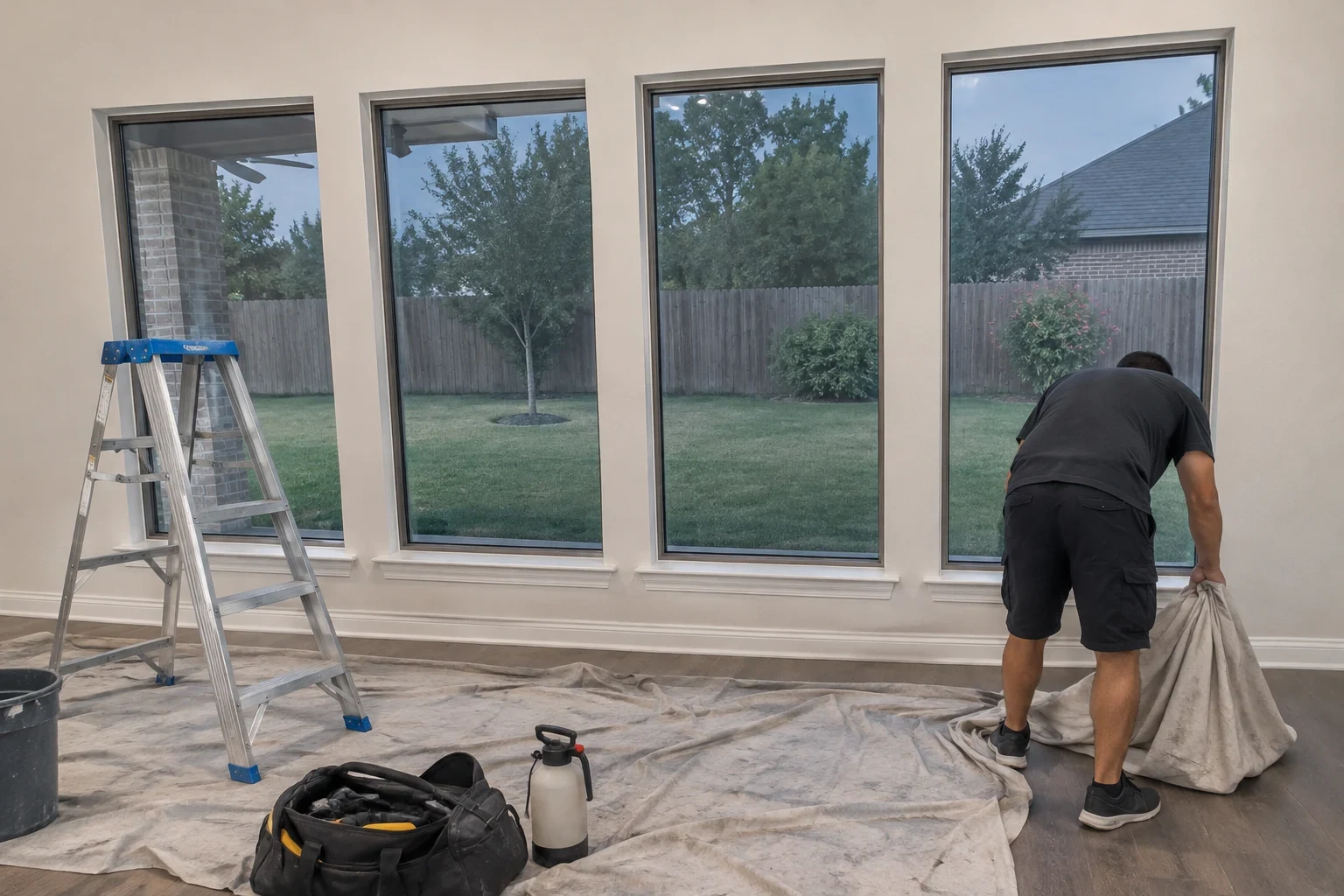
- Drop cloths go down under every window, and towels cover sills and nearby furniture. We move what needs moving and put it back afterward.
- Glass prep and trimming
- The glass is scraped and washed before any film goes on, since dust trapped underneath shows for good. Edges are trimmed tight to the frame for a straight, even line.
- End-of-day cleanup
- We wipe down frames and sills, collect every scrap of liner and film, and vacuum the work area before we leave.
Signs a room could use window film
One room runs hotter than the rest
If a bedroom or game room stays warm even with the thermostat set low, the glass is often the cause. Heat rejection film takes a real load off that room.
Fading floors and fabrics
Lighter patches on wood floors, rugs or upholstery near a window are UV damage. Film blocks most of that UV while still letting daylight through.
Glare you work around
You keep the blinds shut to watch TV or read a screen. Glare reduction film lets you open them again.
Feeling on display after dark
Street-facing windows and front doors with sidelites can feel exposed. Our privacy window tinting page covers the films built for that.
Afternoon sun on west windows
If the late-day sun pushes straight into a living space, that wall is usually where film earns its place first.
What moves the price
Every quote is built from your windows, so we price after we have seen them. The cost comes down to how much glass there is, which film suits it and how easy it is to reach.
Amount and size of glass
Square footage is the main driver. A few large picture windows can cost more than several small ones.
Film type
Ceramic film offers strong heat rejection with very little tint, and it costs more than dyed or standard films. Our ceramic window film page explains the difference.
Access and height
Second-story windows, transoms over stairs and tall two-story living rooms need ladders or staging and more time.
Removing old film
Peeling or bubbled film has to come off and the old adhesive removed before new film goes on, which adds labor.
How the job runs
- 1
Phone call and consultation
You tell us which rooms bother you and why. We set a time to look at the windows, measure, and show samples on the glass.
- 2
A clear written quote
You get the film choice, the windows included and the price in writing. Nothing is added on the day.
- 3
Install day
We protect the room, prep each pane, apply the film with a slip solution and squeegee out the water. Most homes are finished in a day, and we work room by room so the rest of the house stays usable.
- 4
Curing and care
A light haze or small water pockets are normal and fade as the film cures, faster in sunny weather. We ask that you hold off on washing the glass for about a month, then use a soft cloth and a non-ammonia cleaner.
Questions about home window tinting
Will window film make my rooms dark?
Not unless you want it to. Many residential films, ceramic in particular, reject a lot of heat while staying close to clear. We show samples on your glass so you can judge the shade in your own light before deciding.
Is film safe on dual-pane or Low-E windows?
Usually yes, with the right film. Some films absorb enough heat to stress certain dual-pane units, so we check the glass type and choose a film that is compatible with it. If a window is not a good candidate, we say so.
How messy is the installation?
Very little. We lay drop cloths, cover sills and nearby furniture, and clean up the slip solution and every bit of film liner as we go. When we leave, the room is vacuumed and the frames are wiped down.
Can you do just one or two rooms?
Yes. Many people start with the room that bothers them most, often a west-facing living area or a hot upstairs bedroom, and add others later.
Will it help with energy bills?
Blocking solar heat at the glass means the air conditioner works less to cool those rooms, so most homeowners notice the difference in comfort first and in energy savings over a summer. How much depends on your windows, orientation and how the house is cooled.
Let's look at the rooms that bother you
Tell us which windows are causing the heat or glare. We will come out, show you film on your own glass and give you a clear quote.