ServicesSecurity Window Film
Security Window Film in Katy
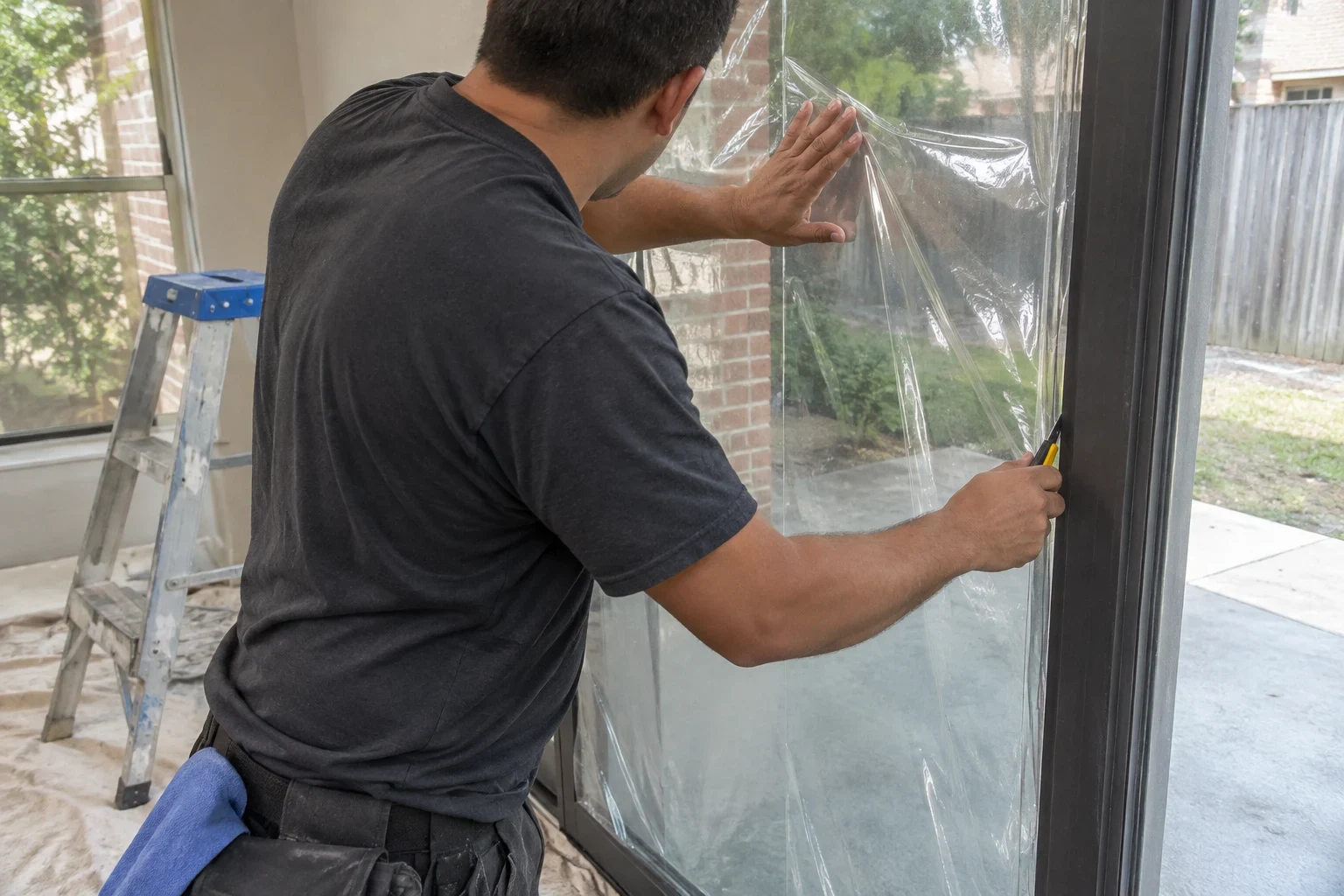
Security window film is a thick, clear layer applied to the inside of your glass. When a pane cracks from a break-in attempt, a storm or a stray baseball, the shards stay stuck together in the frame. We install it carefully and leave every room as tidy as we found it.
What security film does, and what it doesn't
Standard tint is a few thousandths of an inch thick. Security film is much heavier, usually several layers of polyester laminated together, so it can stretch and hold when the glass behind it gives way. A broken pane turns into a cracked, sagging sheet rather than a pile of sharp pieces on the floor.
We'll be straightforward about the limits. Film does not make glass unbreakable. What it does is buy time and reduce the mess: someone trying to get through a back door sidelight has to work at it, which is noisy and slow, and flying glass from storm debris is far less likely to reach the room.
Most of our security film is clear, so your view and natural light stay the same. Many films also block nearly all UV, which helps protect floors and furniture near the glass.
What's included in a security film installation
- A walk-through of every opening
- We look at doors, sidelights, ground-floor windows and any glass near a lock. You'll hear which openings matter most and which ones you can reasonably skip.
- Film thickness matched to the glass
- Thicker isn't always better. We match the film to the pane size and glass type so it performs well and doesn't put stress on older or dual-pane units.
- Optional edge attachment
- On higher-risk openings we can anchor the film to the frame with a structural sealant. That helps keep the whole broken sheet in place instead of letting it push out as one piece.
- Room protection before we start
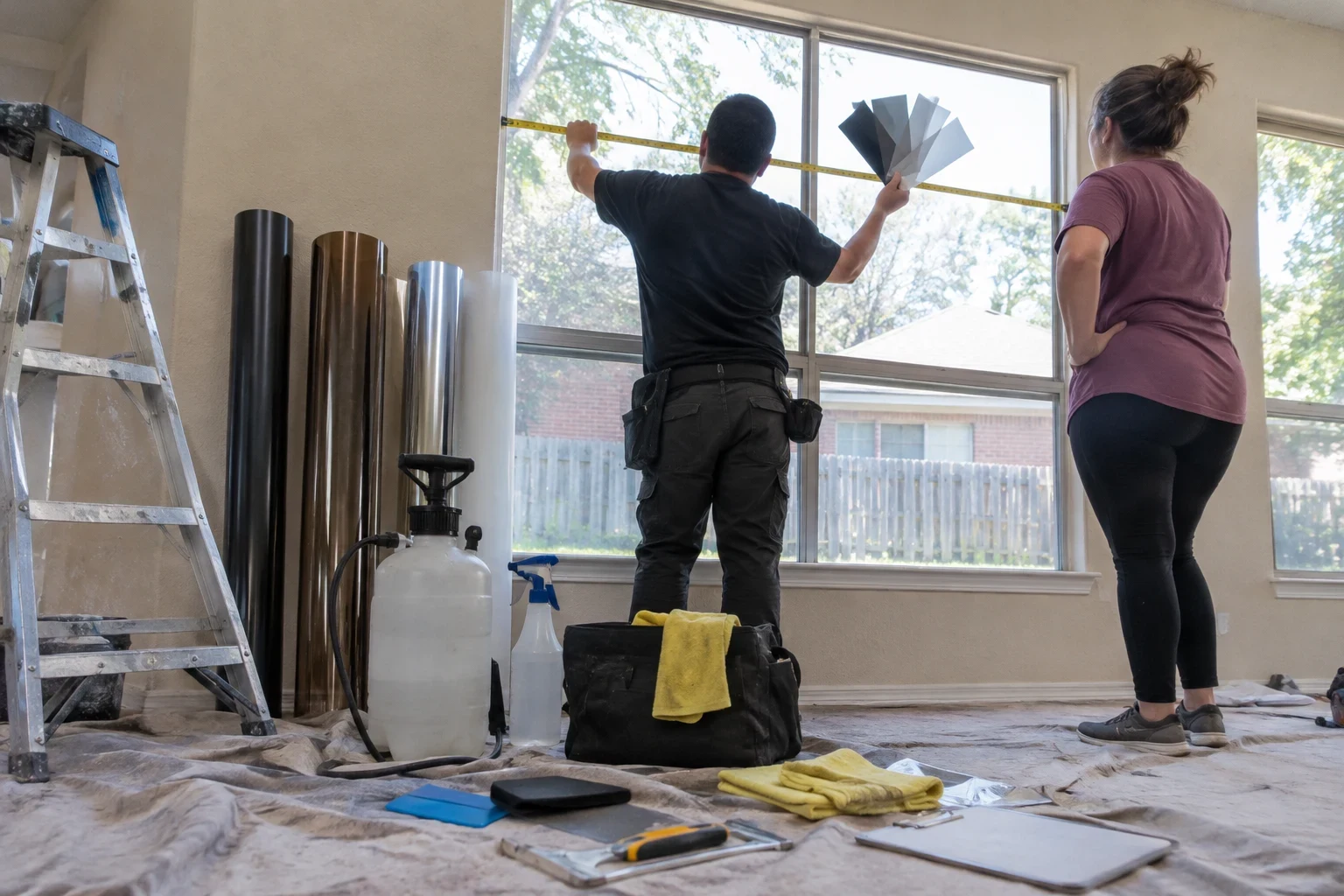
- Drop cloths go down, nearby furniture is moved and covered, and blinds or shutters are taken down and set aside. Wet installation uses water, so we pad the sills and floors.
- Cleanup at the end of each day
- Film backing, trimmed edges and used towels leave with us. We wipe down sills and frames, rehang window coverings and put furniture back where it was.
When security film is worth a closer look
Glass right next to a lock
Sidelights beside a front door and panes on a back door let someone reach in and turn the deadbolt. These are usually the first openings we suggest filming.
Ground-floor windows out of view
Windows hidden by fences or landscaping give an intruder time and cover. Film takes away the quick, quiet entry they're counting on.
Worry about storm debris
Spring hail and Gulf Coast storm season can send debris into glass. Film keeps the broken pieces together, which means less to sweep up and less risk to anyone in the room.
Large panes in busy rooms
Big living room windows and patio glass near where kids play are good candidates. If an accident cracks one, the glass stays put.
A recent break-in nearby
Plenty of people call after hearing about one down the street. It's a sensible moment to look at your own openings calmly, without rushing into more film than you need.
What affects the cost of security film
Security film is priced by the opening, not by a single flat rate. A couple of door sidelights is a very different job from a full ground floor. We itemize each window in your estimate so you can choose which ones to include.
Film thickness
Heavier films cost more per square foot and take more care to install. We recommend the weight that fits each opening rather than the thickest across the board.
Size and number of panes
Total glass area drives most of the price. Many small divided panes take more labor than one large pane of the same area.
Edge attachment
Anchoring film to the frame adds material and time. It's usually worth it on doors and easy-to-reach windows, less so on upper floors.
Access and existing film
Tall windows over stairwells need ladders or staging. Old, failing tint has to be stripped before new film goes on, which adds time.
How the day goes
- 1
Consultation and measuring
On the phone we talk through your concerns, then we visit to measure each pane and check the glass and frames. You get a written estimate that lists each opening separately.
- 2
Preparing the room
We arrive, lay protection on floors and sills, and remove coverings from the windows we're working on. Pets and valuables near the glass are best moved before we start.
- 3
Prepping the glass and applying the film
Each pane is scraped and washed so no dust is trapped under the film. The film is set with a slip solution, squeegeed flat and trimmed tight to the edge. Edge attachment, if chosen, goes on after.
- 4
Tidy-up and a walk-through
We clear every scrap, wipe down the frames and rehang your blinds. Then we walk you through the finished windows and explain the curing period.
Security film questions
Will security film stop someone from breaking in?
It won't make a window impossible to get through. It makes it much slower and louder, because the glass stays stuck to the film after it breaks. Most opportunistic break-ins rely on speed, so that delay matters.
Can I see through it?
Yes. Most security film is optically clear, and from inside or out the windows look much as they did before. If you also want privacy or heat control, we can talk about tinted security films or pairing it with ceramic window film.
How long before I can clean the windows or open them?
The film needs time to cure while the leftover moisture dries out. Expect a slight haze or small water pockets for a while, which clear on their own. We'll tell you how long to wait before washing the glass, and to use a soft cloth with no abrasive products.
Is it safe on dual-pane windows?
Usually yes, but it depends on the glass and the film. Thick film on a large dual-pane unit in direct sun can raise heat stress, so we check the glass type before recommending anything.
How messy is the installation?
Less than people expect. The wet method uses water, but floors and sills are covered the whole time, and we haul away every scrap and wipe everything down before we leave.
Let's look at your doors and windows together
A short phone conversation tells us which openings concern you most. From there we set up a free consultation and give you a clear, itemized estimate.