ServicesCommercial Window Tinting
Commercial Window Tinting in Katy
We install window film on storefronts, lobbies and commercial glass to cut heat, glare and fading. Floors and fixtures are covered before we start, work areas are wiped down when we finish, and your staff can keep serving customers while we move from pane to pane.
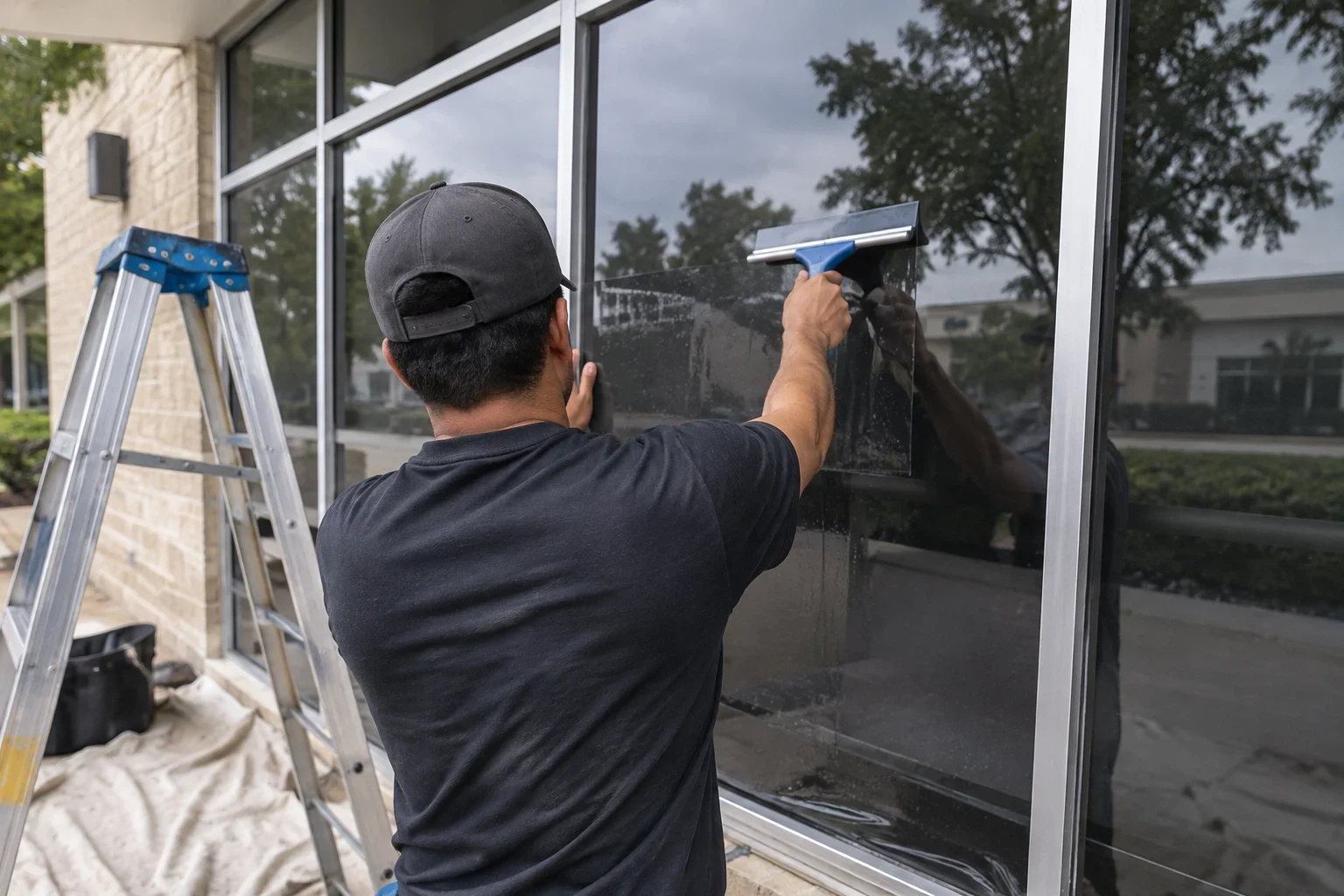
Film that suits a business, installed around a business
Commercial glass works hard. Large storefront panes, glass entry doors and west-facing walls let in heat that the cooling system fights all afternoon, and the same sun fades merchandise, flooring and signage. Window film is a thin layer applied to the inside of the glass. The right film rejects much of that heat, blocks the large majority of UV and cuts glare, without changing the building or blocking the view your customers came for.
We treat every commercial install as work inside someone else's place of business. That means drop cloths at each window, padded ladder feet, water and slip solution kept away from displays and electronics, and a cleanup at the end of every day so you open the next morning to a space that looks normal.
This page covers storefronts, showrooms, restaurants, clinics and other public-facing spaces. If your project is mostly desks and screens, our office window tinting page goes deeper on glare at workstations.
What the work includes
Site walk and film selection
We look at each wall of glass, the glass type and how the space is used. Dual-pane and tempered glass need film matched to them to avoid thermal stress, so we check before recommending anything. You get options such as ceramic film, reflective film or non-reflective film, with plain notes on how each one looks from inside and from the parking lot.
Protection before the first cut
Floors under the windows are covered, nearby outlets and sills are masked, and we move displays only with your go-ahead. Nothing gets set on your counters or merchandise.
Glass prep
Most bubbles and specks come from dirt left on the glass or packed into the gasket line. We scrape and clean each pane and detail the frame edges before film goes on.
Careful installation
Film is trimmed with a slim, even gap at the edges so it doesn't catch and lift, then squeegeed out and edge-sealed. Seams on oversized panes are planned so they fall where they are least noticeable.
Daily and final cleanup
Trimmings, backing liners and used coverings leave with us each day. Sills and floors are wiped, and we finish with a walk-through so you can look at every pane before we pack up.
Signs your commercial glass needs film
Glare at the counter
Customers squint at the register, or screens and menu boards wash out in the afternoon sun.
Faded displays near the windows
Product packaging, fabric, flooring and printed signs lose color fastest closest to the glass. UV is a major cause, and film blocks most of it.
One zone that never cools down
If the front of the space stays warm while the back is comfortable, sun through the glass is often the reason. Heat rejection film evens that out and eases the load on the system during long Katy summers.
Too much view after hours
Back rooms, stock and equipment that are easy to see from outside can be screened with privacy window tinting or a reflective finish.
Old film that is failing
Peeling corners, a purple cast or rows of bubbles mean the film is past its life. We remove it, take off the leftover adhesive and start fresh.
How a commercial install runs
- 1
Phone consultation and site visit
You tell us about the space and what bothers you most about the light. We visit, measure the glass, note access and talk through film choices with you.
- 2
Scheduling around your hours
We can plan the work before opening, after close, on slower days, or in sections so part of the space always stays open. You'll know which windows we are doing and when.
- 3
Install day
Coverings go down first, then prep, film and edge sealing, one section at a time. Fresh film can look slightly hazy or show small water pockets while it cures, which is normal and clears on its own.
- 4
Walk-through and handover
We clear away our materials, walk the job with you and explain how to care for the film during curing and after.
What moves the cost
Commercial pricing depends on the glass and the building more than on a flat rate. After the site visit you get a quote by phone that lists what is included, so there are no surprises on the day.
- Glass area and pane size
- Total square footage matters, and so do oversized panes that need careful seam planning or two installers to handle the film.
- Film type
- Ceramic film, reflective film, non-reflective film and security window film sit at different price points. We match the film to the problem instead of defaulting to the most expensive one.
- Access and height
- Clerestory windows, high lobby glass and windows behind fixed shelving or equipment take more setup time.
- Old film removal
- Stripping failed film and its adhesive is its own step, and the effort varies with how far the old film has broken down.
- After-hours scheduling
- Working early or late to keep your doors open can affect the quote, and we'll tell you up front if it does.
Commercial window tinting questions
Something not covered here? (281) 612-5386
Can we stay open while you install the film?
Usually, yes. We work in sections, keep walkways clear and cover the floor only where we are working. For busy storefronts we can schedule the entry glass for before opening or after close.
Will the film change how our building looks from outside?
It depends on the film. Reflective film gives a mirrored look by day, while non-reflective and many ceramic films look close to clear glass. Some property managers and shopping centers have rules on exterior appearance, so it is worth checking your lease before we finalize the choice.
Is window film safe for dual-pane or tempered glass?
It is when the film is matched to the glass. We check the glass type and sun exposure before recommending a film, because the wrong film on some dual-pane units can add thermal stress. If your windows carry a manufacturer warranty, we suggest confirming its film terms too.
How long does a commercial job take?
That depends on the amount of glass, access and whether old film has to come off. We give you a working timeline with the quote so you can plan staffing and customer traffic around it.
How should our staff care for the tinted glass?
Wait until the film has cured, then use a mild soap solution and a soft cloth or a fresh rubber squeegee. Skip abrasive pads, razor blades and ammonia-heavy cleaners on the film side. We leave written care notes at the walk-through.
Talk through your storefront glass with us
Tell us about your windows, the hours you keep and where the heat or glare hits hardest. We'll set up a free consultation and walk you through the options.