ServicesCeramic Window Film
Ceramic Window Film in Katy
Ceramic film rejects a large share of the sun's heat while keeping your view bright and natural. We install it on homes and offices with the floors covered and the sills protected, then leave every room tidy before we go.
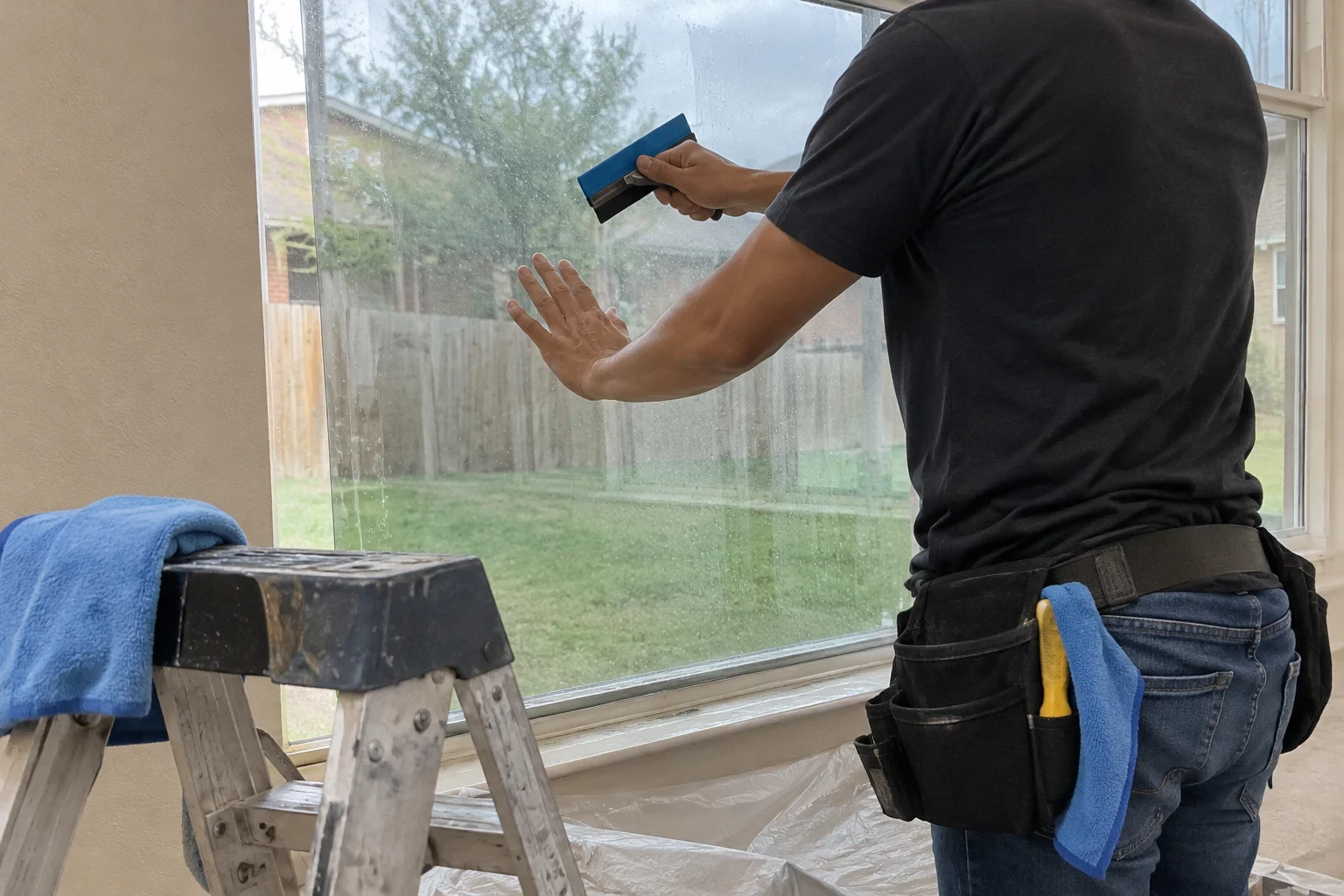
What ceramic film is and when it makes sense
Ceramic window film carries tiny ceramic particles in its layers. Those particles absorb and block infrared light, the part of sunlight you feel as heat, without needing a dark dye or a mirrored metal coating. The result is a film that can look nearly clear on the glass while still keeping a room noticeably cooler.
It is the right call when you want heat rejection and UV protection but do not want the house to look tinted from the street or feel dim inside. Because the film holds no metal, it will not corrode at the edges or interfere with cell, Wi-Fi or smart-home signals.
It is also a fit for rooms that take the full afternoon sun through a long Texas summer, where cheaper dyed films tend to fade and turn purple over time.
What the work includes
A look at your glass first
We check whether each window is single pane, dual pane or low-E, and how much sun it takes. Some combinations need a specific film so the glass does not take on too much heat, and we choose accordingly.
Shade samples in your own light
We hold samples against your actual windows so you can see how each shade reads from inside and out. Lighter ceramic shades often perform close to darker ones, so you rarely have to trade view for comfort.
Protection before any glass is touched
Drop cloths go down on floors and absorbent pads go along sills and window tracks. We move furniture only with your say, and set it back where it was.
Careful prep and fitting
Each pane is washed and scraped so no dust or residue is trapped under the film. Film is cut on site to the glass, with a narrow, even gap at the edges for a finished look.
Cleanup in every room
Trimmed film, backing liners and wet towels leave with us. We wipe down sills and frames so the room is ready to use when we walk out.
Signs ceramic film is worth a look
Rooms you avoid in the afternoon
A bedroom or living room that stays warm long after the AC kicks on usually means heat is coming straight through the glass.
Glare on screens and TVs
If you close the blinds every time you sit down to work or watch something, film can cut the glare while letting you keep the shades open.
Faded floors and furniture
Hardwood, rugs and upholstery near windows lose color from UV exposure. Ceramic film blocks most UV, which slows that fading considerably.
Old tint that has bubbled or turned purple
Dyed film breaks down in strong sun. We remove the old film and residue before applying ceramic, so the new layer bonds properly.
Weak signal near the windows
If a metallic film is already on your glass and your phone struggles nearby, a non-metal ceramic film is a direct improvement.
How an installation day runs
- 1
Free consultation by phone
You tell us which rooms bother you and what you want from the film. We set a time to see the windows, measure and bring samples.
- 2
Setting up the room
We cover the floor under each window, pad the sills and keep our tools on mats rather than your furniture. Work moves one room at a time so the rest of the house stays usable.
- 3
Prepping, fitting and squeegeeing
The glass is washed twice, the film is laid on with a slip solution, then pressed out with a squeegee to remove water and air. Edges are trimmed by hand.
- 4
Walkthrough and tidy-up
We look at every pane with you, pick up all scraps and wipe the frames. You get plain instructions on curing and care before we leave.
What shapes the price of ceramic film
Ceramic film costs more per square foot than dyed film because of what is in it, but the total for your project depends on the windows themselves. We measure on site and give you a quote broken down by room, so you can see where the cost comes from and decide which windows matter most.
- Square footage of glass
- The total area of film is the biggest driver. A few large picture windows can equal a dozen smaller panes.
- Film grade and shade
- Ceramic films come in several performance levels. Higher heat rejection in a lighter shade usually means a higher-grade film.
- Access and window height
- Second-story windows, transoms over doors and glass above stairwells take ladders or staging and more time.
- Removing old film
- Stripping failed tint and its adhesive is slow, careful work. Bare glass in good shape is quicker to film.
- Glass type
- Dual-pane and low-E windows may call for a particular film to keep heat load on the glass within a safe range.
Ceramic window film questions
Something not covered here? (281) 612-5386
Will ceramic film make my rooms darker?
Not much, if you choose a light shade. Ceramic film gets its heat rejection from the particles rather than from dark dye. Many people pick a shade that is hard to notice from inside the room.
Does it affect phone or Wi-Fi reception?
No. Ceramic film has no metal layer, so it does not block or weaken signals. That is one of the main reasons people choose it over metallic films.
Is it safe for dual-pane windows?
Usually yes, with the right film. We check your glass type and sun exposure and recommend a film suited to it. Some window makers have their own terms about aftermarket film, so it is worth looking at your window paperwork too.
How is ceramic different from reflective film?
Reflective film bounces heat back with a mirrored finish that shows from outside. Ceramic absorbs and blocks heat with a clear, low-reflection look. If you want daytime privacy from the street, our Reflective Window Film page explains that option.
How long until I can clean the windows?
Give the film a few weeks to cure. You may see a light haze or small water spots early on, and they clear as the moisture dries out. After that, a soft cloth and a mild, ammonia-free glass spray are all it needs.
See ceramic film on your own windows
We bring samples, measure each pane and talk through shades and costs room by room. The consultation is free, and you will know exactly what the work involves before any floor gets covered.